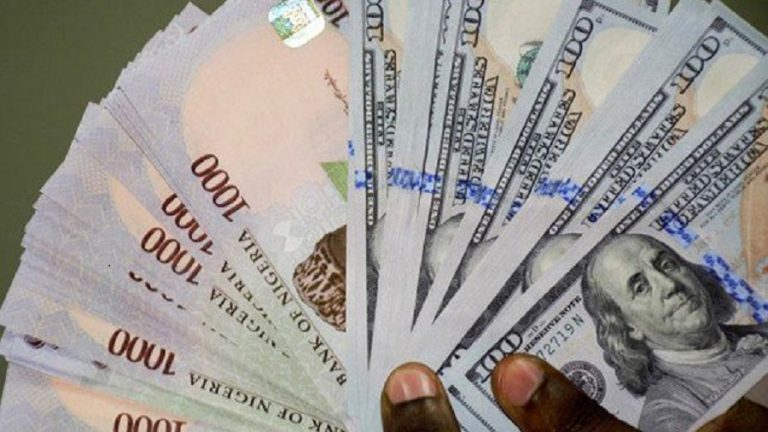
The Nigerian naira has witnessed a remarkable surge against the United States dollar, thanks to the Central Bank of Nigeria (CBN) successfully clearing a backlog of foreign exchange claims worth $7 billion. This development has instilled confidence in the market, following the CBN’s commitment to resolving the backlog, which has been achieved in multiple phases. The naira’s appreciation can be attributed to a decrease in demand for the dollar and the CBN’s efforts to curb currency speculation and illicit activities in the market.
Clearance of $7 Billion Forex Backlogs:
The CBN has fulfilled its promise to clear the outstanding backlog of valid foreign exchange claims. This achievement comes after the bank had previously cleared $1.5 billion from the backlog, demonstrating its determination to restore confidence and stability in the market. Mrs. Hakama Sidi Ali, the Acting Director of Corporate Communications at the CBN, announced the final settlements, marking a significant milestone for the bank.
Naira’s Performance in the Market:
Data from the FMDQ Securities Exchange reveals that the naira closed at 1,410/dollar at the parallel market and N1,492 at the official Nigerian Autonomous Foreign Exchange Market (NAFEM). This represents an impressive appreciation of 13.5%, or N190, at the parallel market and 4.5%, or N68, at the official market.
Factors Driving the Naira’s Appreciation:
Several factors have contributed to the recent surge in the value of the naira. Firstly, the reduced demand for dollars from buyers has led to a decrease in pressure on the naira. Additionally, the CBN’s implementation of circulars and crackdowns on illegal Bureau de Change (BDC) operators has helped to plug leakages and reduce the volatility of the naira. The activities of the Economic and Financial Crimes Commission (EFCC) in major cities have also played a significant role in stabilizing the exchange rate.
Reactions from the Market:
Currency traders and Bureau de Change operators have expressed mixed reactions to the new exchange rate. While some traders have found opportunities for profitable transactions, others have been forced to sell at a loss due to the reduced demand for the dollar. The decreased demand can be attributed, in part, to the CBN’s decision to sell dollars to BDC operators at a lower rate of $1,300 per dollar.
Increased Foreign Exchange Liquidity:
The improved liquidity in the foreign exchange market is a result of the CBN’s efforts to increase Nigeria’s external reserves. Data from the CBN shows that foreign currency reserves have grown by 3.62% to $34.37 billion as of March 12, 2024, up from $33.17 billion at the beginning of February 2024. This increase in reserves is driven by higher remittance payments from Nigerians abroad and increased purchases of local assets by foreign investors.
CBN’s Forex Reforms:
The CBN’s foreign exchange reforms have played a significant role in the appreciation of the naira. These reforms include the establishment of a willing buyer-willing seller market, the removal of limits on margins for International Money Transfer Operator remittances, the introduction of a two-way quote system, and broader reforms in the BDC segment. These measures aim to restore stability, enhance transparency, increase supply, and promote price discovery in the Nigerian autonomous foreign exchange market.
The recent surge of the naira against the US dollar is a positive development for the Nigerian economy. The CBN’s successful clearance of the $7 billion foreign exchange backlogs demonstrates its commitment to stabilizing the exchange rate and addressing imported inflation.
The improved liquidity in the foreign exchange market and increased foreign currency reserves serve as indicators of confidence for investors and businesses. The CBN’s ongoing implementation of forex reforms will be crucial to maintaining the stability of the naira and fostering economic growth in Nigeria.
Source: PunchngNews