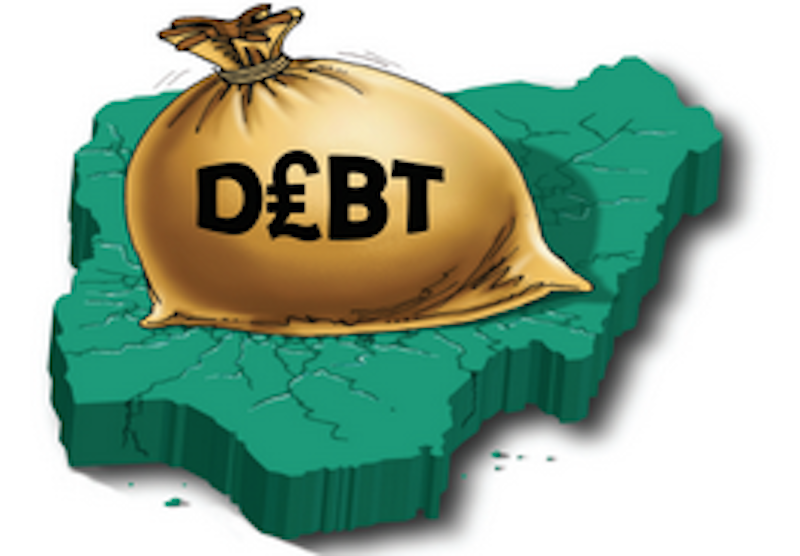
The significant growth in Nigeria’s public debt stock has become a pressing concern, with projections indicating it will hit N130tn by the end of the year. Afrinvest, an investment management firm, highlighted this in their report titled “Bank Recapitalisation, Catalyst for a $1tn Economy.” This figure represents a notable increase from N97.34tn in the fourth quarter of 2023 to N121.67tn in the first quarter of 2024, marking a 24.99 per cent quarter-on-quarter growth.
The rising debt is split between domestic and external sources, with domestic debt accounting for 63.6 per cent (N77.5tn) and external debt at 36.4 per cent (N44.2tn). Domestic debts include Federal Government bonds, Treasury bills, and other domestic obligations, while external debts are derived from multilateral, bilateral, and commercial creditors. The fiscal deficit, debt-to-GDP ratio, and debt servicing-to-revenue rate are all expected to climb, culminating in figures that could significantly impact the nation’s financial stability.
Afrinvest has raised concerns about the unrealistic revenue assumptions in the 2024 budget, especially the projected 43.9 per cent revenue from oil and other minerals. Historical data show a pattern of underperformance, as evidenced by the 2023 budget where actual revenue exceeded projections, but the corresponding expenditure surged even higher, exacerbating the fiscal deficit.
The Federal Government’s share of total public debt has also grown considerably, contributing significantly to the overall debt stock. Afrinvest warned that aggressive borrowing by the government could negatively impact bank deposits due to the more attractive yields on risk-free government securities compared to bank deposits. This situation could lead to heightened risks of asset deterioration among banks, fueled by the consumption-heavy budgetary allocations.
Amid these economic challenges, Afrinvest has commended the Central Bank of Nigeria (CBN) for its efforts to streamline the Bureau De Change (BDC) operations. The CBN’s policies aim to consolidate foreign exchange segments and improve compliance among BDC operators. However, the report warns that these measures have become prolonged due to inadequacies in Nigeria’s forex reserves, which fall short of meeting market demands.
To mitigate the forex market challenges, the report recommends exploring alternative forex sources, including bilateral loans, natural resource-tied loans, debt-for-nature swaps, and asset concessions. These measures are seen as short-term reliefs unless traditional forex inflows—such as oil production, remittances, and foreign portfolio investments—are revitalized through supportive fiscal policies.
Overall, Nigeria faces a precarious financial future marked by rising public debt and insufficient revenue generation. Addressing these issues will require a multi-faceted approach, blending realistic budgeting, enhanced revenue streams, and financial regulations aimed at stabilizing the nation’s economic framework.
Visit our :
Facebook @bulletinnews,
Twitter @thebulletinnews,
Instagram @thebulletinnews,
and TikTok pages.
Please note that every article on this website is original and not copied content. Our reporters across Nigeria and the rest of Africa produce all the content.
Thank you.