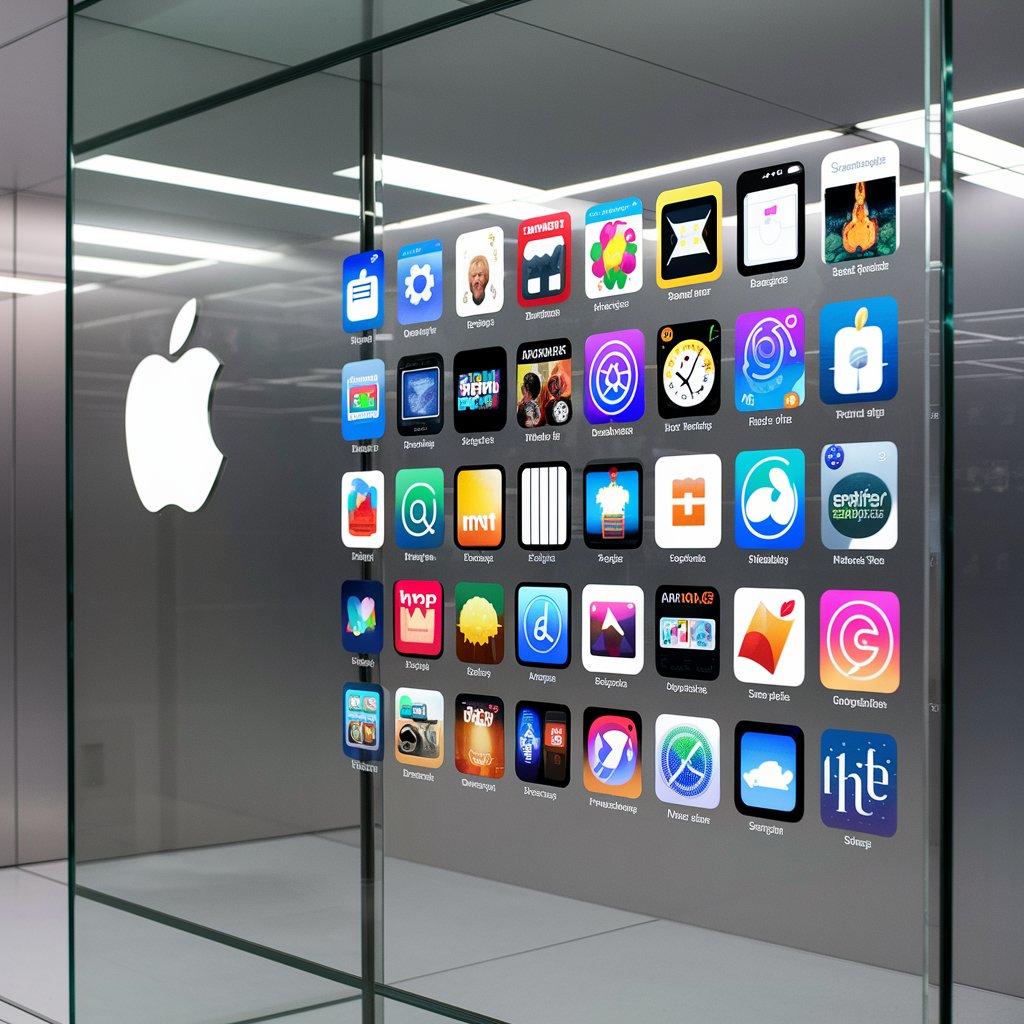
On Thursday, Apple announced modifications to its App Store in response to the European Union’s accusations that the company violated the EU’s new digital regulations. The EU argued that the Apple’s App Store’s terms restricted app developers from directing consumers to alternative payment options, marking Apple as the first major tech company accused under the Digital Markets Act (DMA).
Apple’s app store has now committed to making changes to comply with the DMA and address the European Commission’s concerns, particularly those raised by the EU’s antitrust regulator. Originally, Brussels mandated that developers could only guide customers via a link in their app that led to a web page for completing transactions. Regulators found that Apple imposed “several restrictions,” preventing developers from communicating, promoting offers, and finalizing contracts through their preferred channels.
Starting this autumn, Apple will allow developers in the EU to “communicate and promote offers for purchases” across various platforms, including alternative app marketplaces. However, Apple’s announcement also introduced a new fee structure for developers who redirect customers outside of an app for offers and content. Developers will face a 5% fee on sales of digital goods and services made on any platform within a year of a user initially installing an app with external links.
Large fines can be avoided if tech giants like Apple adapt their platforms to EU regulations. The DMA requires the EU to conclude any investigations within a year. The commission stated it would assess Apple’s changes, considering market feedback, particularly from developers.
These charges stemmed from investigations launched in March into Apple, Meta (Facebook’s parent company), and Google under the DMA. Meta faced similar accusations in July. The DMA aims to enhance competition in the digital market by outlining what big tech firms can and cannot do, such as offering choice screens for web browsers and search engines to give users more options.
The law authorizes the EU to impose fines up to 10% of a company’s total global revenue, escalating to 20% for repeat violations. Apple could also face daily penalties of up to 5% of its average daily global turnover if it fails to comply. For context, Apple’s total revenue for the year ending September 2023 was $383 billion.
The Coalition for App Fairness, which includes Spotify among its members, criticized Apple’s recent announcement. The coalition argued that the new fee structure is confusing, arbitrary, and expensive, complicating the digital landscape for developers and making it more costly for consumers.
Apple isn’t alone in facing DMA scrutiny. Companies like Google parent Alphabet, Amazon, Meta, Microsoft, and TikTok owner ByteDance must also adhere to the DMA. Booking.com will need to comply later this year, and the commission is evaluating whether Elon Musk’s X should also be subject to the rules.
Apple’s App Store has long been a contentious issue with the EU, even before the DMA came into effect in March. In a probe prompted by Spotify’s complaint, the EU fined Apple 1.8 billion euros ($2.0 billion) in 2020. Apple has appealed against the fine and is also under investigation for previous compliance changes, such as allowing third-party app stores.
Visit our :
Facebook @bulletinnews,
Twitter @thebulletinnews,
Instagram @thebulletinnews,
and TikTok pages.
Please note that every article on this website is original and not copied content. Our reporters across Nigeria and the rest of Africa produce all the content.
Thank you.