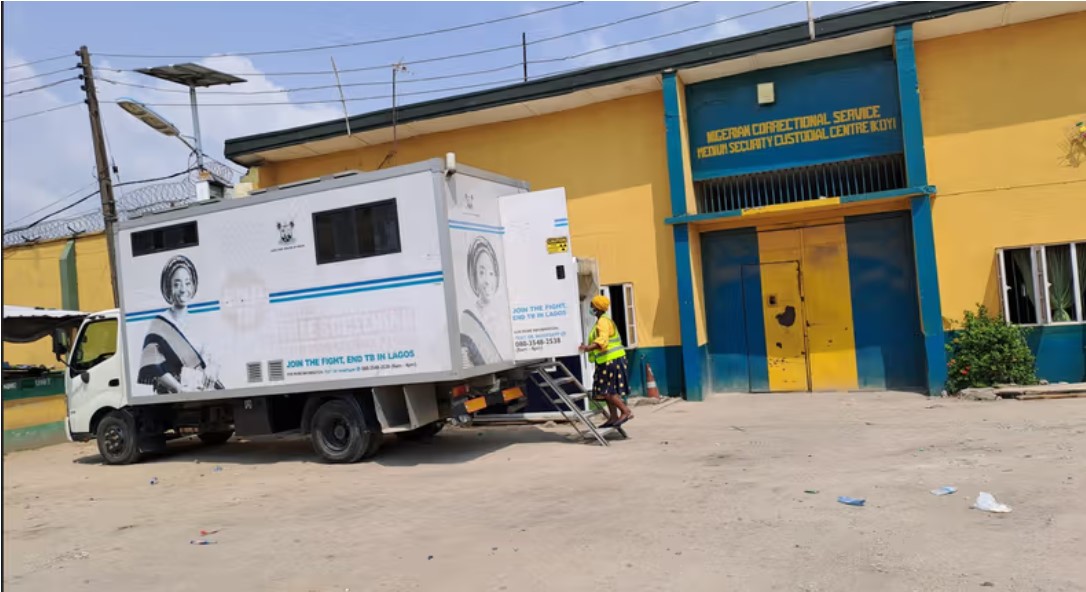
Olubunmi Tunji-Ojo, the Minister of Interior, expressed his concerns over the deteriorating state of the structures at the Ikoyi Prison/Correctional Centre in Lagos. During his visit to various agencies and parastatals under the Ministry of Interior, the minister promised to undertake the redevelopment and reform of the facility.
Tunji-Ojo pledged to prioritize the development of the structures and facilities at the Ikoyi Prison/Correctional Centre, emphasizing the need for interagency collaboration. He assured the public that the government is committed to enhancing efficiency and managing the country’s resources effectively to ensure a safer Nigeria.
The minister expressed his dissatisfaction with the current condition of the correctional centre, stating that urbanization has taken a toll on the facility. He questioned the presence of the facility in its current location and mentioned the possibility of relocating some of the correctional centres.
Highlighting the legal requirement of a buffer zone of 100 meters for correctional centres and adjoining lands, Tunji-Ojo acknowledged that this stipulation had been violated in the case of the Ikoyi Correctional Centre. He emphasized that the present administration upholds the law and is dedicated to rectifying any shortcomings in the facility.
The government’s ultimate goal, according to the minister, is to transform custodial centres into effective correctional facilities that promote rehabilitation rather than psychological damage. Tunji-Ojo stressed the importance of true reform, not just in name but in ideology, orientation, and approach. The aim is to create an environment where inmates can be reformed, transformed, and given hope for a better future.
The minister believes that the change of name from “prison” to “correctional centre” should reflect a genuine shift in mindset and approach. He envisions a correctional centre that fosters education, transformation, and a sense of hope. However, he expressed concerns that the current environment at the Ikoyi Correctional Centre poses a security threat and hampers the achievement of these goals.
In conclusion, Minister Tunji-Ojo has made a commitment to develop and reform the dilapidated Ikoyi Correctional Centre. The government aims to create a conducive environment that facilitates the rehabilitation and transformation of inmates, ensuring that the correctional centre becomes a place of hope, education, and positive change.