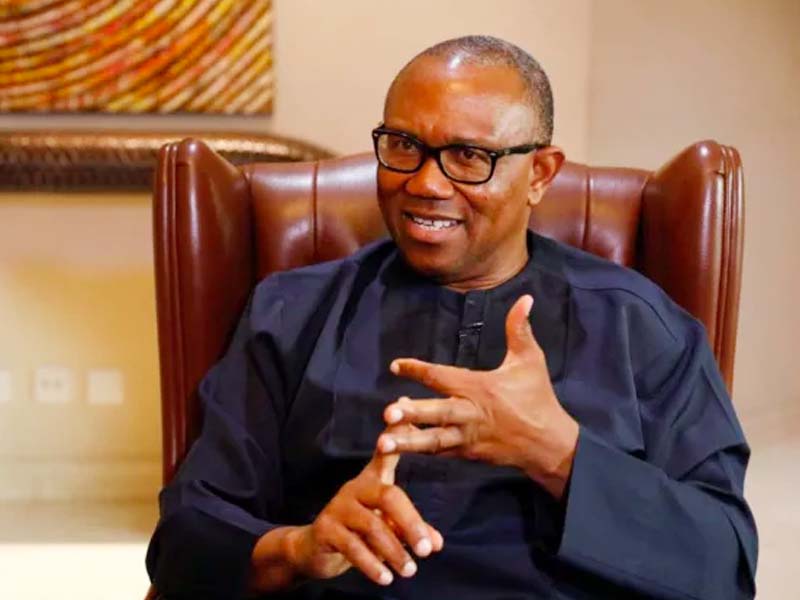
Former presidential candidate Peter Obi recently expressed concerns about Nigeria’s increasing public debt in a statement on social media. The country’s debt has reached N97.3 trillion, according to the Debt Management Office, and Obi argues that much of this borrowing has not resulted in productive outcomes.
As a financial expert, Obi points out that debt has significantly increased in recent years, including N30 trillion in Central Bank borrowing during the previous administration. He does, however, think that there has not been much value added to the legally mandated investments.
Obi highlights the burden of debt servicing costs, which amount to nearly N10 trillion annually. This exceeds the combined budgets for important sectors such as defense, education, health, and infrastructure.
If issues such as wasteful spending and unclear loan utilization are not addressed, Obi warns that Nigeria’s growing obligations will severely hinder future development. He suggests temporarily slowing down the pace of debt accumulation to thoroughly review loan applications and destinations.
Obi’s comments raise important questions about economic oversight. As a former leader committed to responsible governance, he emphasizes the need for transparency and accountability in borrowing decisions that impact the nation’s progress. It is hoped that ongoing debates will lead to reforms that restore Nigeria’s financial integrity and sustainability.