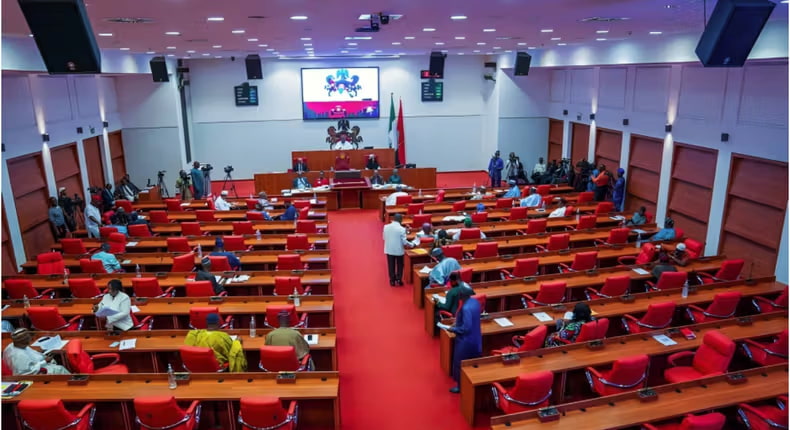
Nigerian Senate has given its approval to a bill that seeks to amend the National Minimum Wage Act of 2019. This amendment will result in an increase of the minimum wage from ₦30,000 to ₦70,000.
The bill, titled “A Bill for an Act to Amend the National Minimum Wage Act, 2019 to increase the National Minimum Wage and reduce the time for periodic review of the national minimum wage from five years to three years and for related matters, 2024,” was introduced by Senate Leader Senator Opeyemi Bamidele of the All Progressives Congress (APC), Ekiti Central.
President Bola Tinubu submitted this executive bill to the Senate, which successfully went through its first reading, passed the second reading, and ultimately received approval after being read a third time.
During the debate on the bill, Senator Bamidele explained its purpose, stating, “The Bill, inter alia seeks to amend the National Minimum Wage Act, 2019, to increase the National Minimum Wage and reduce the time for periodic review of the Minimum Wage from Five (5) years to Three (3) years, and for Related Matters.”
He further highlighted the need for this amendment in response to the demands and negotiations between the Federal Government and Organised Labour. The current economic situation in the country has led to widespread calls for an increase in the Minimum Wage. After careful consideration, the Senate has agreed to raise the minimum wage from ₦30,000 to ₦70,000.
This decision also entails a reduction in the review period for the National Minimum Wage from five years to three years, allowing for more frequent assessments and adjustments based on the prevailing economic conditions.
With the Senate’s approval, this bill marks a significant step towards ensuring fair wages for Nigerian workers and addressing the concerns of Organised Labour. The increase in the minimum wage aims to alleviate the financial burdens faced by many individuals and families across the country.
As the bill progresses through the legislative process, Nigerians eagerly anticipate the positive impact it will have on the lives of workers and their families.