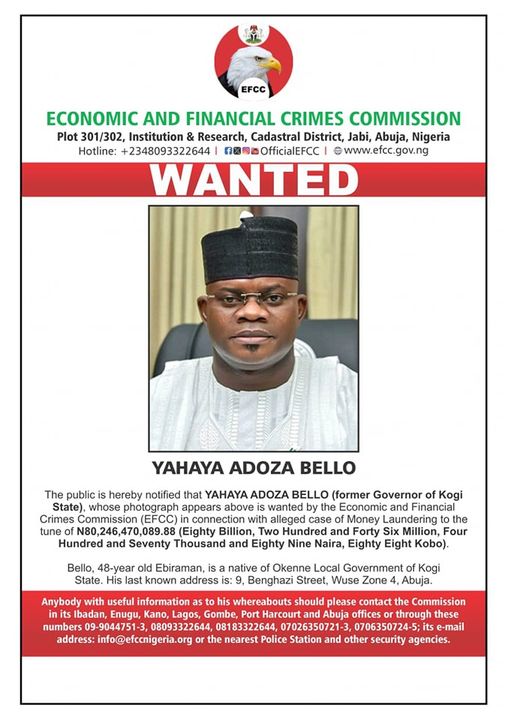
The allegations of money laundering leveled against former Kogi State Governor Yahaya Bello have captured national attention as the latest high-profile case involving a senior government official. As the EFCC continues efforts to arraign Bello and three co-defendants, many see this as an important test of Nigeria’s commitment to transparency and accountability at the highest levels of politics.
Bello stands accused of laundering an enormous sum totaling over N80 billion through questionable financial transactions during his tenure from 2016 to 2019. Due to the massive amount involved and Bello’s position of authority within a state executive office, this promises to be one of the EFCC’s most significant public corruption cases in recent years if it proceeds. Many Nigerians are closely monitoring how the commission handles bringing such an influential suspect to justice through legal and constitutional means.
So far, Bello’s evasion of the initial arrest warrant and intervention by associates like Governor Ododo to aid his extraction have frustrated the EFCC’s plans for an orderly court process. As a fugitive, Bello’s current whereabouts remain uncertain, leaving lingering doubts about whether he can or will submit to the legal system’s authority. The commission now faces the challenge of apprehending a high-ranking target who seems to believe he is above the law and accountability for his time in office. Their next moves in attempting to serve justice will speak volumes.
Should Yahaya Bello continue to actively evade charges, it threatens to undermine faith in the anti-corruption agenda. Many citizens already perceive a lack of will to prosecute the politically connected. Allowing top officials like Bello to so brazenly dodge fair trial risks confirming such doubts and perceptions of a two-tiered justice system – one for elites and another for ordinary people. The EFCC’s successful enforcement of its valid warrant, even against resistance, becomes a litmus test.
How this saga ultimately plays out through the courts may also affect the reputations of those like Governor Ododo accused of assisting Bello’s evasion. If due process is circumvented, it fuels accusations of corruption even among today’s state leadership. However, a firm demonstration that no one is above the law could help rebuild some trust in the integrity of institutions tasked with rooting out financial crimes and misuse of public funds.
For those dedicated to establishing good governance and curbing the rampant graft challenging Nigeria’s potential, the Bello matter takes on outsized importance. His prosecution, if handled with transparency and respect for constitutional rights and rules of evidence, can send a signal that abuse of power for illicit personal gain will not be tolerated.
However, failure to properly investigate and try such a high-level defendant risks legitimizing a culture of impunity that continues to undermine the nation’s progress. All eyes are on how this landmark case now unfolds.